Are you in crisis and need help? FIND HELP »

Recognizing Red Flags: Identifying and Responding to Child Abuse

March 21, 2023

By: Elissa Kraynik

Supervisor/Family Support Specialist/Child Passenger Safety Technician

Parent Connection


Disclaimer: It is important to trust your gut. It is always better to report than to second guess yourself and stay quiet. Many of the below signs may be present or maybe just one or two signs. Every case is unique. Always keep in mind that warning signs do not mean that a child is being abused.


Child abuse is a heartbreaking reality that affects millions of children worldwide. In comes in many forms, including physical, emotional, and sexual abuse – as well as neglect. As a responsible adult, it’s essential to know the signs of child abuse and be able to recognize when a child is in danger. Here are some red flags that may indicate child abuse:


15 signs of abuse or neglect in a non-verbal infant, toddler, or child

  1. Crying when being left at a caregivers or when a parent picks them up when they previously have not
  2. Sudden change in behavior — aggression, anger, hostility or hyperactivity
  3. Unusual or sudden new fears
  4. Sleep problems and nightmares
  5. Unexplained injuries, or injuries that do not match the explanation given
  6. Injuries that do not match the child’s age or developmental abilities
  7. Rebellious or defiant behavior
  8. Self-harm or attempts at suicide
  9. Knowledge of sexual behavior that is not age appropriate.
  10. Sudden hostility or inappropriate behavior with other children
  11. Loss of interest in activities that previously brought them joy
  12. A sudden desperate need for attention and/or affection
  13. Weight loss or weight gain inappropriate for the child’s size and age
  14. Poor hygiene/lack of clean clothes
  15. Stealing or hiding food


14 Signs of abuse or neglect in a verbal toddler or child.

Note: Even if a child has the ability to verbalize that they are not safe or their needs are not being met, they may be afraid to tell anyone.

  1. Withdrawal from friends or family
  2. Increased or many absences from school
  3. Refusing to go to school, go to daycare, or going home after school or daycare or becoming worked up before these events
  4. Depression, anxiety, sudden changes in behavior, lack of interest of previously enjoyed activities
  5. The appearance of lack of sleep
  6. New rebellious behavior, changes in rule following, acting out
  7. Unexplained injuries, or injuries that do not match the explanation given-lack of eye contact when explaining these injuries
  8. Knowledge of sexual behavior that is not age appropriate, inappropriate behavior with other children
  9. Lack of self-esteem, confidence, or pride in accomplishments
  10. A sudden desperate need for attention and/or affection
  11. A change in schoolwork or change in grades
  12. Weight loss or weight gain inappropriate for child’s size and weight
  13. Poor hygiene/lack of clean clothes/wearing the same clothes every day without washing
  14. Stealing or hiding food


If you suspect that a child is being abused, it’s essential to report your concerns to the appropriate authorities.  You can contact your local child protective services agencies, the police, or a child abuse hotline. Remember, it’s better to err on the side of caution and report your concerns than to ignore the signs of abuse. With your help, we can protect children and prevent child abuse from happening.

Announcing the 2022 Excellence in Advocacy Award Recipients

April 27, 2022

Recognizing dedication, leadership, and action having a positive effect on survivors of sexual assault and child maltreatment in Northeast Wisconsin.

(Green Bay, Wis.) – Family Services of Northeast Wisconsin is proud to announce the recipients of the 2022 Excellence in Advocacy Award. The award is presented annually in April to community professionals who respond to victims of sexual assault and/or child maltreatment in Northeast Wisconsin. Recipients must demonstrate dedication, leadership, and action to have a positive effect on survivors and their families as they heal and move forward.

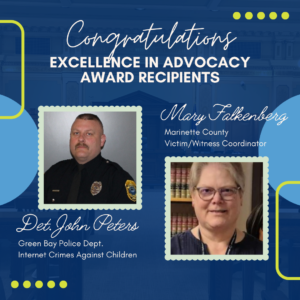
Out of the nearly 30 nominations that were submitted, this year’s chosen recipients are Marinette County Victim/Witness Coordinator Mary Falkenberg and Green Bay Police Detective John Peters.

“I am thrilled to recognize John and Mary as our Excellence in Advocacy Award winners,” said Lois Mischler, President and CEO of Family Services. “Our communities are safer and systems of reporting these crimes are more survivor focused because of their incredible work and the partnerships they provide.”

Falkenberg has more than 30 years of experience assisting victims of sexual assault. She is the only victim/witness coordinator in Marinette County and has worked closely with the Sexual Assault Center of Family Services to make sure that victims get the support they need. Those who nominated Falkenberg describe her as “a force of support,” and “a rich resource who leads with more than just policy and procedure, but with such heart and compassion.” Colleagues also noted Falkenberg’s continued commitment to her work during a personal health battle with cancer, stating, “even when [Mary] was going through chemo, her dedication to victims still held strong.”

Detective Peters will be honored specifically for his work on Internet Crimes Against Children (ICAC). For nearly 10 years, Peters has dedicated himself to the investigation of child exploitation and child pornography online while also taking the time to educate children, teens and parents about the dangers that exist. Colleagues and community partners noted in their nominations that Peters is “someone who treats each case as if the child was his own.” They also noted the impact of his work, stating “If not for the arrest of these offenders, they would no doubt continue to seek images of exploited children.”

Both Falkenberg and Peters will be honored during a private reception with fellow nominees, community partners, friends and family members in May.

Latest News

The Unseen Load: What Parents Ar…

Being a parent is one of life’s greats joys, and greatest challenges. Here at Family Services, we see you jugg…

Read More

The Power of Pause: How Time-Out…

Read More

Recognizing Red Flags: Identifyi…

Read More

View All »

Pinwheels return for Child Abuse Prevention Month

April 12, 2022

April display calls attention to the importance of prevention & intervention programs in the hopes that all children can enjoy a safe and happy childhood.

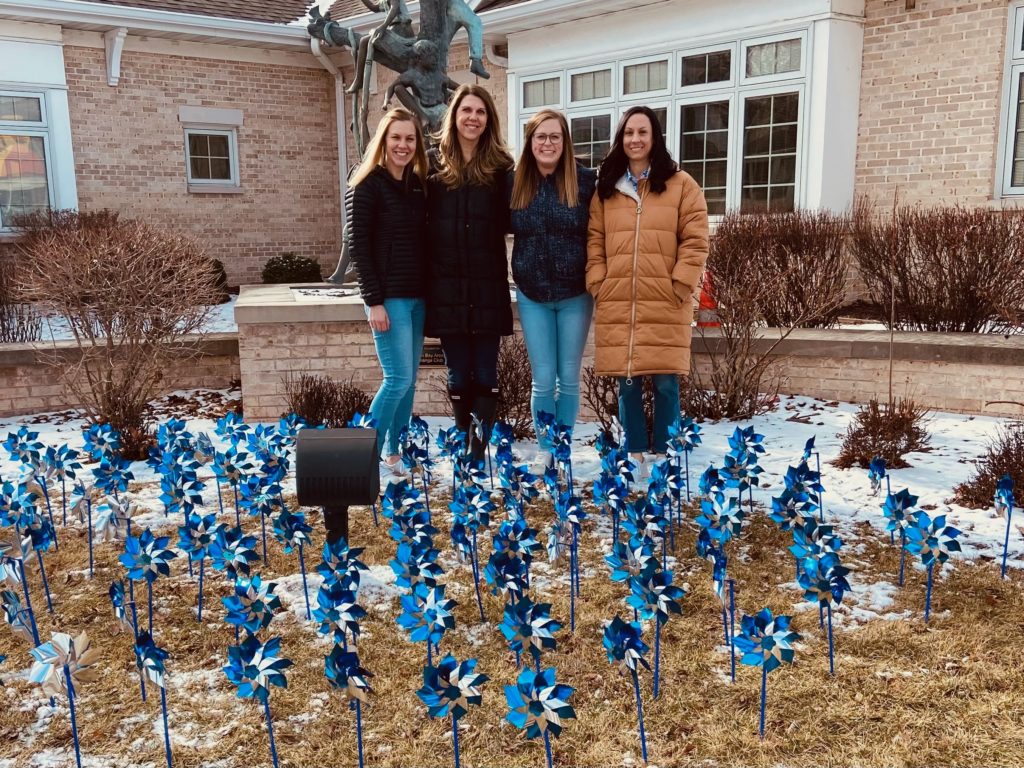
Pictured: Willow Tree staff members Megan Hackl, Kristie Sickel, Becca Wilbershide, and Jodi Stahl planted roughly 115 pinwheels in honor of the children served at the center so far in 2022.

(Green Bay, Wis.) – Family Services of Northeast Wisconsin installed its annual “Pinwheels for Prevention” display in April for Child Abuse Prevention Month. The display serves as a reminder of the critical importance of making our communities a better, safer place for children.

The pinwheel is a national symbol of Child Abuse Prevention. It represents the joys of childhood and promotes the awareness that all children deserve to be safe and well. Approximately 115 pinwheels are displayed outside Willow Tree Cornerstone Child Advocacy Center, 503 S. Monroe Ave., in Green Bay – each representing a child helped at Willow Tree so far in 2022 due to allegations of sexual or physical abuse, neglect or other maltreatment.

“Each child who comes to Willow Tree is unique and different in their own special way,’’ said Kristie Sickel, Willow Tree program supervisor and child forensic interviewer. “Willow Tree Cornerstone Child Advocacy Center strives to Protect, Heal and Care for every child who comes through our doors, as they move towards a better tomorrow.”

In a typical year, roughly 5,000 suspected cases of child abuse are reported in Brown County alone. Family Services say the first step to preventing child abuse and neglect is by making sure that parents and caregivers have the resources and support they need to safely care for their children.

“The Welcome Baby Program is a program of prevention,” said Julie Ferral, manager of the Healthy Families Program and Welcome Baby Program at Family Services. “All parents receive a Welcome Baby visit either prenatally or at the hospital at the time of their child’s birth with information about community resources, which include home visitation programs that can support them in their parenting journey.”

Ferral says the agency is always looking for additional partners in the community to help connect them with new and expectant parents. For more information about partnering with Family Services on child abuse prevention through its children and families programs, please contact Julie Ferral at [email protected]. For information about Prevention Education that is geared toward children and parents, contact Becca Wilbershide at [email protected].

Packers’ AJ Dillon donates $10K to Willow Tree Child Advocacy Center

January 20, 2022

The Packers running back is using part of his fantasy football winnings to help abused children access care and support.

Packers AJ Dillon donates to Willow Tree
All-Pro Reels, CC BY-SA 2.0 , via Wikimedia Commons

(Green Bay, Wis) – Green Bay Packers running back AJ Dillon recently came out on top of his celebrity fantasy football league. He donated all $35,000 of his winnings to charity, including $10,000 to Willow Tree Cornerstone Child Advocacy Center in Green Bay.

Willow Tree is an innovative, nonprofit program of Family Services of Northeast Wisconsin. Its mission is to Protect, Heal and Care for children who experience abuse, neglect or other maltreatment. The center primarily serves children living in Brown County, but also sees children from surrounding areas and even some as far away as Milwaukee and Upper Michigan.

“I was so fortunate to grow up in such a loving home with my mom and younger sister,” said Dillon. “The two of them mean everything to me and it breaks my heart to know that there are young children out there that aren’t able to experience the same love and care my sister and I received.”

Dillon says he wants to make sure that children who are abused know that there are people who care about them.

“It is a tough topic to discuss, but there are kids that are victims to abuse out there in our community and I wanted to help spread awareness and let them know that they are loved and that there are places to go for them to get help, which is why I chose Willow Tree,” said Dillon.

At Willow Tree, children are able to access a child forensic interview and medical evaluation, as well as supportive advocacy services and counseling to help them heal and begin to move forward.

“It is heartwarming to know that we have support from individuals in our community like AJ, who can bring awareness to the difficult topic of child abuse,” said Kristie Sickel, Willow Tree Program Manager. “His donation shows these children that they are not alone, that they are believed, and they can leave feeling like a champion.”

In addition to Willow Tree, Dillon also donated $25,000 to the Cancer Team at Bellin Health. The donation to Bellin has a personal connection for Dillon, whose soon-to-be mother-in-law was diagnosed with breast cancer during the off-season. She did some of her treatments at Bellin.

Dillon’s road to fantasy-football victory started over the summer. Sleeper, a fantasy sports app, challenged him to enter the Sleeper Bowl after Dillon tweeted his interest in joining a fantasy football league. Despite it being his first foray into the fantasy leagues, Dillon walked away the winner.

The NFL prohibits players who engage in fantasy football from accepting prizes over $250. According to Sleeper, it was Dillon’s idea to donate all of his winnings to two of his favorite causes.

For more information about Dillon’s Fantasy Draft victory and his donations, be sure to check out the following stories:

Latest News

The Unseen Load: What Parents Ar…

Being a parent is one of life’s greats joys, and greatest challenges. Here at Family Services, we see you jugg…

Read More

The Power of Pause: How Time-Out…

Read More

Recognizing Red Flags: Identifyi…

Read More

View All »

Pinwheels for Prevention returns

April 1, 2021

Annual display of pinwheels aims to raise awareness that all children deserve to be safe and well.

Pinwheels for Prevention 2021
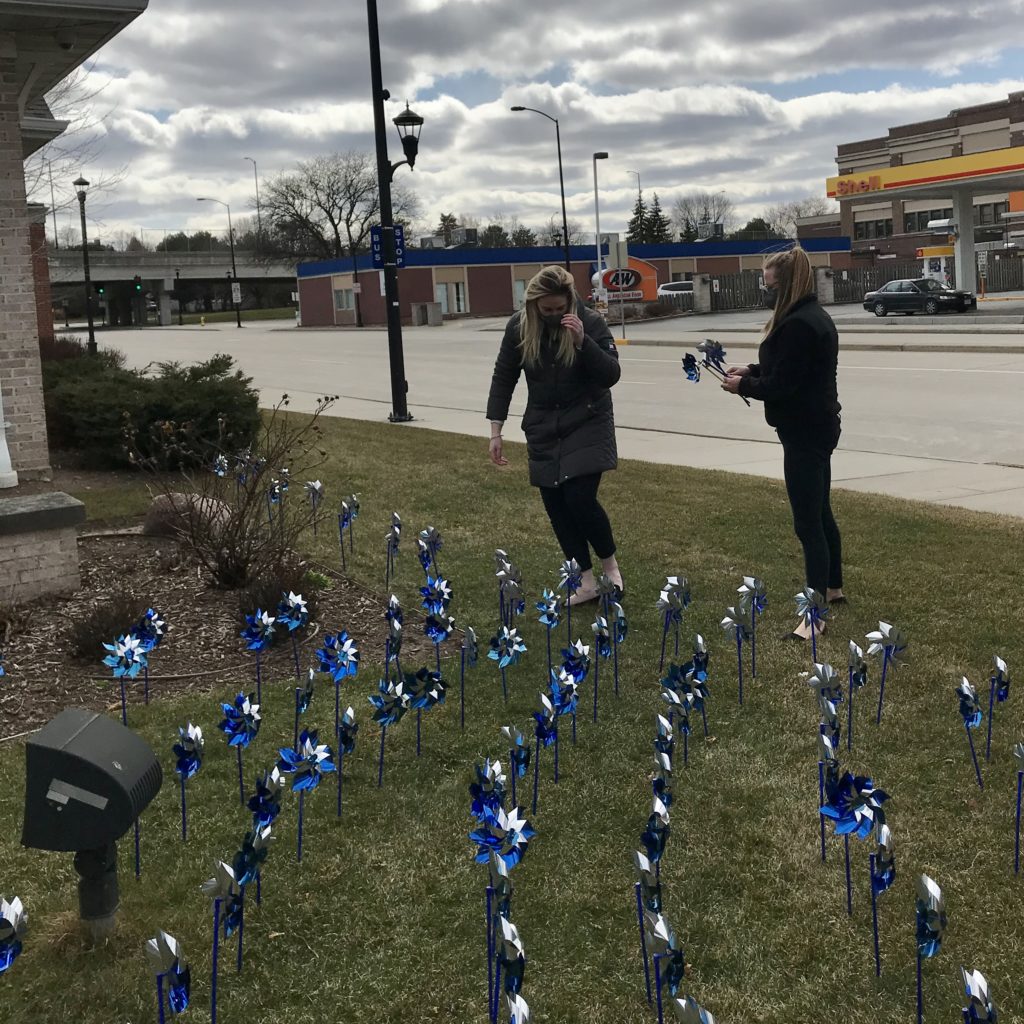
Family Services staff place 144 pinwheels outside Willow Tree Cornerstone Child Advocacy Center in Green Bay on March 31st, 2021. Each pinwheel represents one child helped at the center so far this year.

(Green Bay, Wis.) – Family Services of Northeast Wisconsin, in honor of National Child Abuse Prevention Month, is bringing back its annual “Pinwheels for Prevention” display in April to encourage all individuals and organizations to play a role in making our communities a better, safer place for children.

Throughout April, 144 pinwheels will be displayed outside Willow Tree Cornerstone Child Advocacy Center, an innovative program of Family Services, at 503 S. Monroe Avenue. Each pinwheel represents a child helped at the center so far in 2021. The Pinwheel represents the joys of childhood and promotes the awareness that ALL CHILDREN deserve to be safe and well.

“The main objective of Willow Tree is to provide a more compassionate response to children who have been abused, helping them heal from their traumatic experience and lead successful lives in the future,” said Kristie Sickel, Willow Tree program supervisor and child forensic interviewer.

Roughly 5,000 suspected cases of child abuse are reported in Brown County in a typical year. According to the U.S. Department of Health and Human Services, the long-term impacts of child abuse and neglect can be profound and may endure long after abuse or neglect occurs. Family Services hopes the display will call attention to the importance of early intervention for victims, as well as prevention programs to ensure that parents have the proper knowledge, skills, and resources they need to care for their children.

“We’re actually reaching out early to all new parents, ideally prenatally, who may need assistance and support in parenting,” said Julie Ferral, manager of the Healthy Families program for Family Services. “Whether it be by connecting them to a resource, providing education on healthy parenting, or providing them long-term support through intensive home visiting.”

To learn more about Family Services programs, make a donation, or donate to the Willow Tree wish list, please click here to visit our homepage.

Pornography, Exploitation, and Human Trafficking

January 5, 2021

What happens when human trafficking and the online sex industry collide? The troubling ties between the two, and what can be done to stop it.

human trafficking

By Shelby Mitchell
Victim Advocate
Sexual Assault Center of Brown County


The topic of human trafficking can often be controversial one. Wherever you stand on this issue, it is important to know the facts and understand basic definitions.  The United Nations Office on Drugs and Crime defines human trafficking as any situation in which “force, coercion, abduction, fraud, deception, abuse of power or vulnerability, or giving payments or benefits to a person in control” are used to exploit another person. If any of these qualifiers are present, it’s human trafficking.

Many survivors of human trafficking are often subjected to multiple forms of exploitation, including pornographic images.

It has become incredibly common for me to hear from survivors in Northeast Wisconsin that their trafficker forced or coerced them into posing for sexually explicit photos. These images and other video content were then used to maintain control of that victim. Traffickers often share these images online and through various apps. They may also threaten to send the images to the victim’s family and friends. These methods of control further add to the shame that is already felt by many human trafficking survivors.

This type of exploitation is fueled by the increasing demand for nude images and other pornographic content on the web. Data from Webroot Cybersecurity estimates that 35% of all internet downloads are related to pornography. A study quoted in a recent article from Exodus Road also found that data aggregated from 400 million web searches revealed that the most popular term related to sexual searches was “youth.” Additionally, one of the most-searched terms on Pornhub, a popular porn website, is “teen.” This term has remained in their top 10 searches for six years.

If, at any point, a minor is used for commercial sexual exploitation that is human trafficking. Period.

Research has also raised the concern that some people who view pornography will eventually act on the physical desires that they have. This may result in a person paying someone to act out their desires with. This person may not understand that they have fueled the problem of human trafficking in two ways: first, through the consumption of online pornography and the second through in-person sex acts.

There are several things that we, as a society, can do to stop the sexual exploitation of others.

First, we have to say “no” to any content that depicts the exploitation of another human being — especially minors. This extends from the shows that we watch to the other materials we consume such as books, magazines and on social media.

If you see any images on social media that could depict the exploitation of another person’s body, report it. Reports can be made directly through the social media site or reported to the Cyber Tip Line at https://report.cybertip.org.

Another way you can help is by educating yourself on companies that profit from sexual exploitation. A list can be found at https://endsexualexploitation.org/ on the Dirty Dozen list. You can also educate others on the dangers of pornography and the connection to human trafficking. There are many online resources including: Endsexualexploitation.org, PolarisProject.org, Exodus Road, and Shared Hope International to name a few.

And lastly, please remember that any time pornography is produced and distributed at the expense of an individual against his/her will, human trafficking has occurred. Together, we can do our part to end sexual exploitation.


Additional Resources:

https://blog.theexodusroad.com/10-tools-to-keep-your-kids-safe-online

https://endsexualexploitation.org/

https://www.missingkids.org/gethelpnow/cybertipline

www.polarisproject.org


Tagged , , ,

3 Simple Strategies to Protect Kids from Abuse

October 6, 2020

The first step to preventing child abuse? Talking to children about it. An expert shares 3 tips that will help you start the conversation in ways that even very young children will understand.

mom and child


By Becca Wilbershide
Child Abuse Prevention Specialist
Willow Tree Cornerstone Child Advocacy Center


Child abuse is a topic most parents don’t want to think about discussing with their kids. Unfortunately, it is a conversation that must be had. If you haven’t talked to your child about abuse, it may be because you doubt your own perceptions of what abuse is and how it happens. You might be afraid that you or your child will accuse someone falsely. Or, you may be putting off the conversation out of fear that your child will reveal something that is painful to hear.

Talking to your child about abuse doesn’t have to be scary. Below you will find 3 simple strategies to help you have this conversation, as well as some tips on why talking about abuse is important:

Call Private Body Parts by Anatomically Correct Names

According to Psychology Today, when kids are comfortable using the standard terms for their private body parts, they have more protection against sexual abuse. If your child feels awkward talking about their body parts, or if they feel embarrassed about asking questions, they will be less likely to tell you if someone is touching them inappropriately.

Start using anatomically correct names from an early age. You can begin by referring to them during diaper changes, bath time, when the child is getting dressed and/or when it is time to potty train.  If you are already using nicknames for private body parts, it’s okay to start using the correct names now. Make it clear that although your family has its own nicknames for private body parts, the correct names are what a doctor calls them.  If you are concerned about your child getting in trouble with other adults by using the names, then let the child know that these are PRIVATE and they should not use the names in public places, like at school.


Make Household Touching Rules

Have your family all sit down at the table or maybe in the living room and work together to decide which touches you deem safe and unsafe. Display these rules in way that anyone in the family can see the rules at any time. While making the list, talk about touches that are safe and okay to do: hugs, high-fives, knuckles etc., and unsafe: hitting, slapping, kicking etc. Make it clear that the rules apply to everyone inside and outside your home.

While making your list of Touching Rules, be sure to include the “Clean and Healthy Rule.”  This rule states that no one is allowed to look at or touch another person’s private body parts unless they are keeping them clean and healthy. For children, this typically means only doctors and parents. Touching or looking at private body parts under any other circumstance should be listed under unsafe touch. Having this rule will make it easier for your child to know the difference between good touches and bad touches.


Let Them Know They Can Talk to You

Let your child know that no matter what they tell you, that you will always have their best interest at heart.  Tell that that you will always believe them and will always listen to them.  Repeat, repeat, repeat. This lets the child know that you are someone they can trust and talk to if something bad is happening to them, without fear of getting in trouble for what is going on.

When it comes to child abuse there are some easy steps to help prevent it.  Teach your children the correct names for their private body parts, make touching rules, and let them know you will always be a person that they can trust.

If you need help with any of these things or have questions please call Willow Tree Cornerstone Child Advocacy Center at 920-436-8881 and ask for Becca Wilbershide, Prevention Education Specialist. Prevention education is a free service provided by Willow Tree that is available to schools, parents, organizations, and more.

Tagged , ,

Willow Tree Raises Flag in Memory of Child Abuse Victim

August 12, 2020

The Child Advocacy Center is paying tribute to a little girl. She died in 2017 as a result of child abuse.

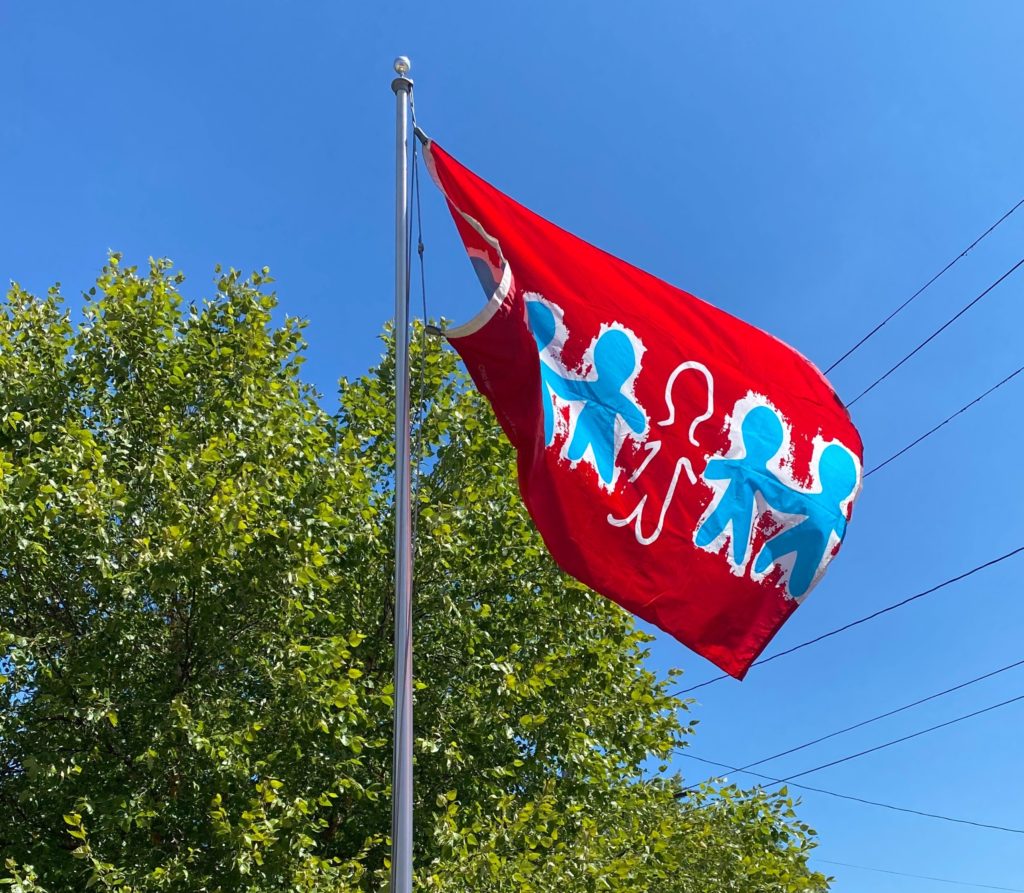
Child abuse memorial flag
A flag flies outside Willow Tree Cornerstone Child Advocacy Center in Green Bay in memory of a child victim of physical abuse.

By Kristie Sickel
Program Supervisor
Willow Tree Cornerstone Child Advocacy Center

The flag you see above is one we never wanted to fly outside Willow Tree Cornerstone Child Advocacy Center in Green Bay. We put it up late last week to remember a little girl who died as a result of severe physical abuse. Her abuser was just sentenced to 24 years in prison for her death. Her mother is also charged and awaiting sentencing. That little girl was just 15 months old when she died.

During the investigation, all four of the girls’ siblings were brought to Willow Tree to be medically evaluated for signs of abuse and to talk about what happened in their home. Investigators needed to know if the children had witnessed anything and if they were also being abused. Three of the siblings were older but the youngest was just a baby.

The information we gathered that day at Willow Tree helped our partners get these children to safety. All four siblings were placed into the care of relatives. One of our advocates has provided ongoing support to the family ever since, keeping them up to date on court proceedings.

This case reminds us why Willow Tree is so needed in our community. At the Child Advocacy Center, our staff and our partners work closely together to ensure that abused and neglected children are heard, believed, and kept safe. This is what you are supporting when you support Willow Tree.

When the flag went up on Friday, all three of the little girl’s older siblings stopped by to take a picture with the flag in memory of their sister. It was a truly touching moment and tribute.

Today, August 12, 2020 is our online Day of Giving in place of the 6th Annual Life Saver River Cruise. The event would have raised critical funds for our services. If you haven’t yet donated, please consider making a donation now.

Your support will help more children access forensic interviews, medical evaluations, counseling, and ongoing support. With your help, we can give these children the support they need to be safe and build a bright future.

Tagged

Protecting Children from Abuse: It’s on All of Us

April 28, 2020

It’s as critical as ever that we watch over the children around us. What you can do to protect them when something seems wrong.

Child Abuse

By Kristie Sickel
Program Supervisor/Child Forensic Interviewer
Willow Tree Cornerstone Child Advocacy Center


In times of instability and stress it is not uncommon for rates of child abuse to increase. The COVID-19 pandemic is undoubtedly one of those times. We know that some children are not safer at home. But while the rate of child abuse is likely going up, reports of child abuse have gone down.

Children are no longer in the places where adults had previously looked out for their safety and well-being. This includes schools, childcare facilities, after-school programs, and other public places. In many cases, children are even isolated from their extended family members. This lack of interaction means children have fewer people watching over them and fewer opportunities to tell if someone is hurting them.

It is important to remember during this time that we all have a responsibility to protect children. If you know a family that is under extreme stress, you can help by doing small things to ease some of the burden they are feeling. Small acts of support in the form of food, toilet paper, children’s activities or an empathetic ear can make a world of difference to ease their stress.

If you have a concern or if something does not feel or look right, make a report to your local child welfare agency. Making a report is asking for help and services from a professional who can further assess the situation. Remember to trust your gut and never assume that someone else will make the call for help.

For more information about abuse or to make a report your area, please visit https://dcf.wisconsin.gov/reportabuse.


Tagged